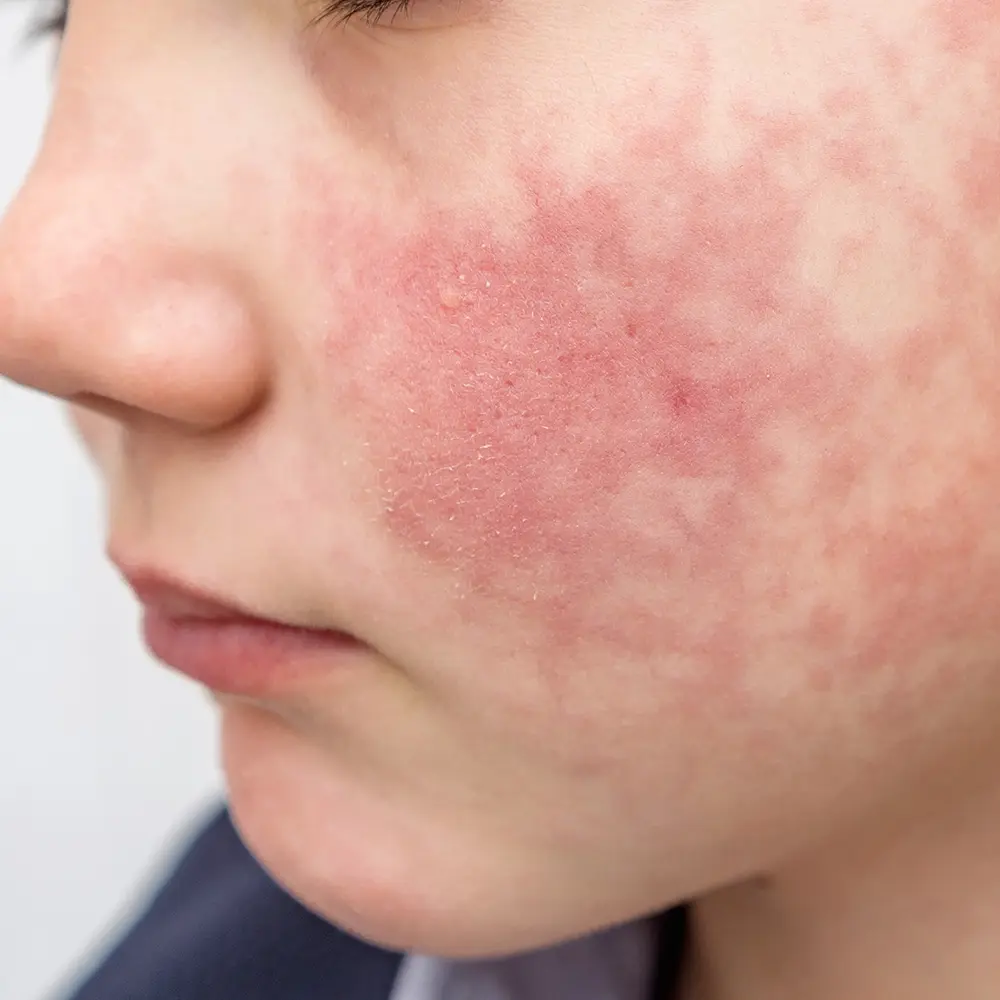
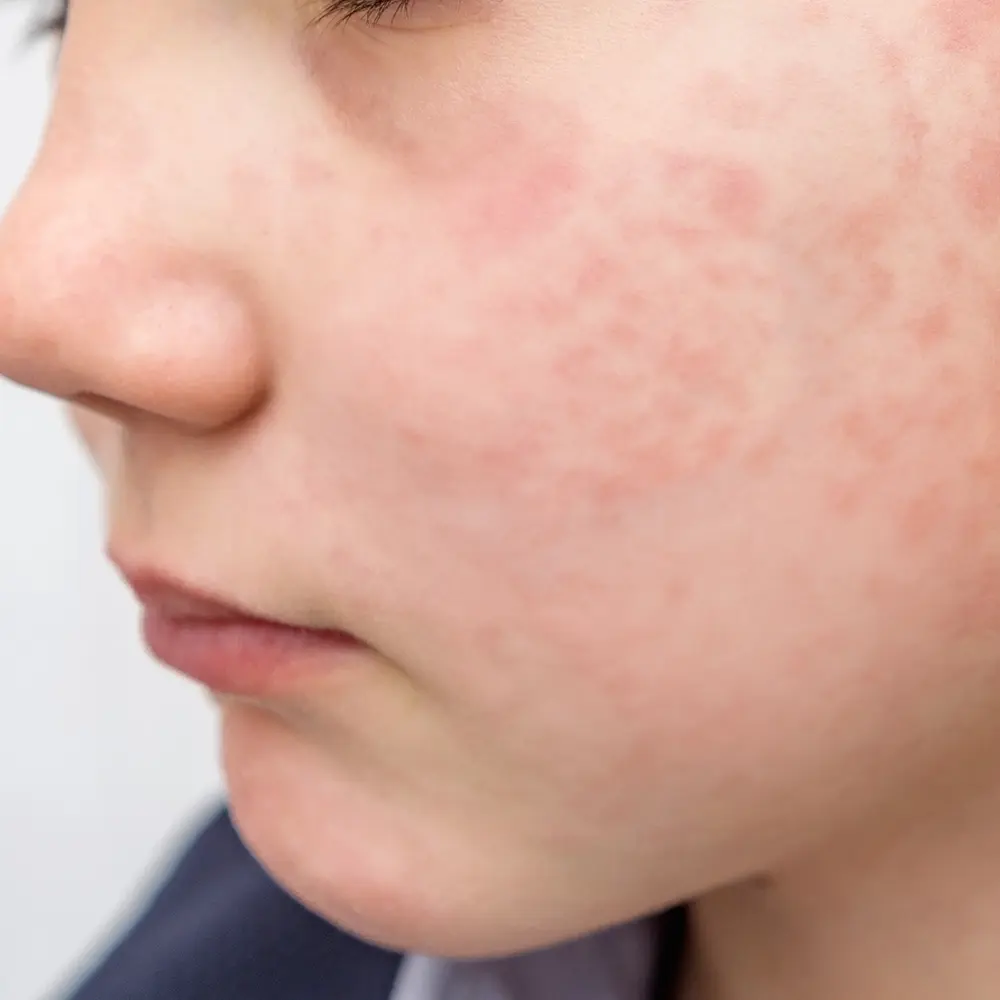
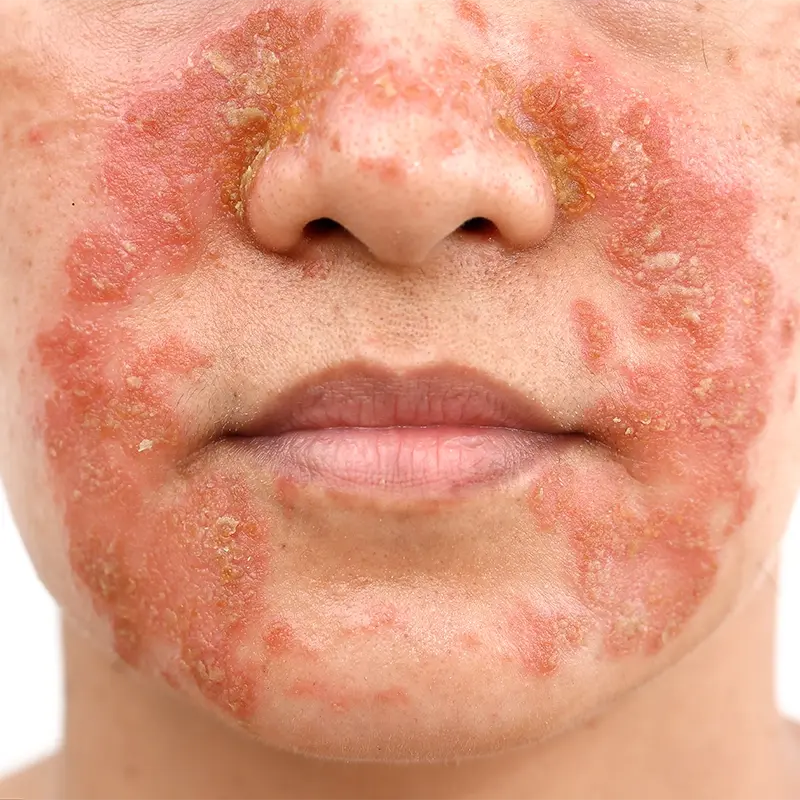
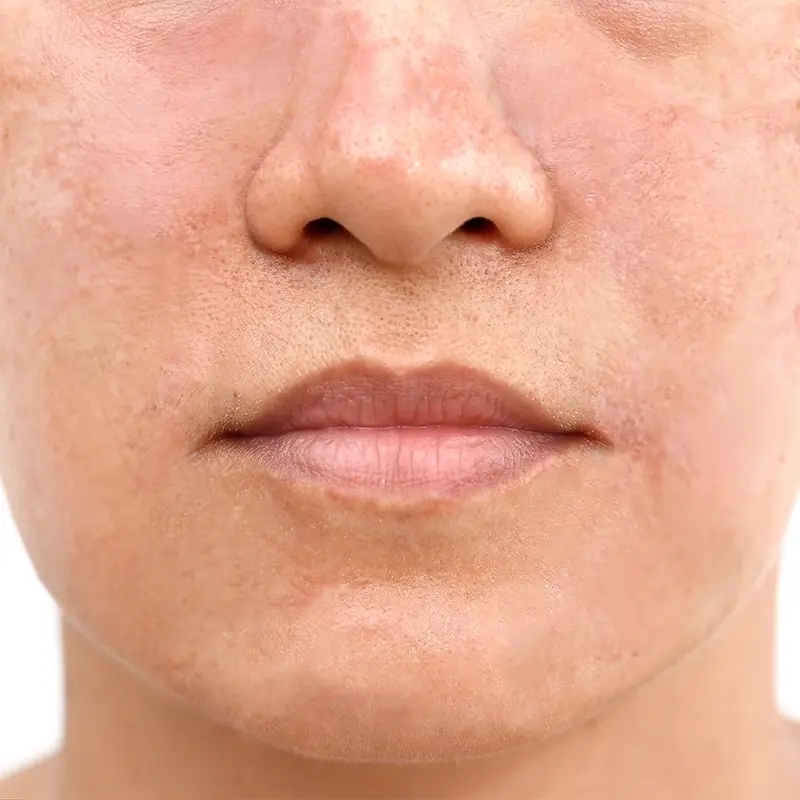
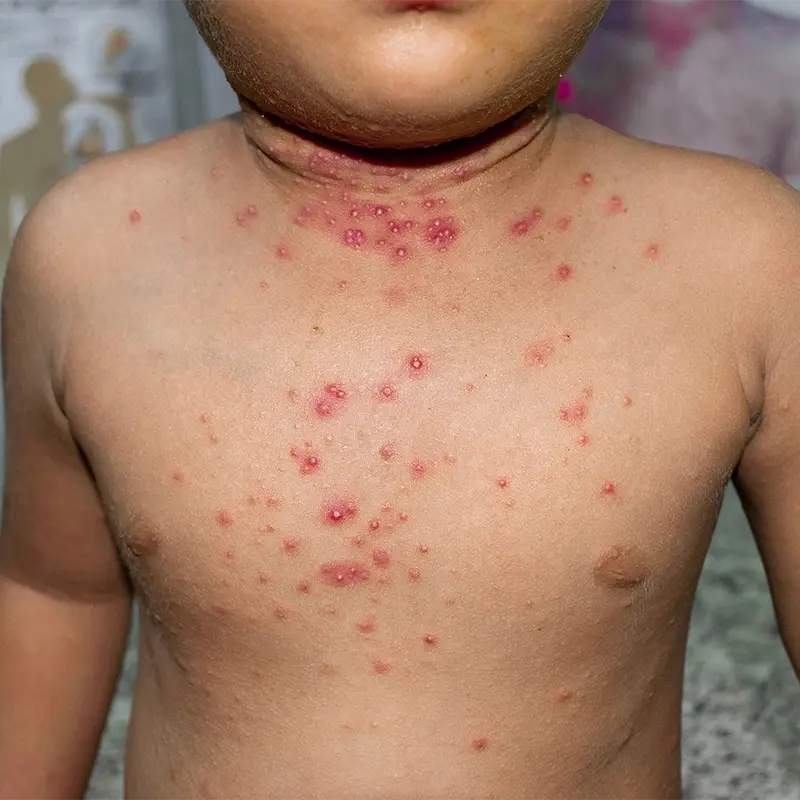
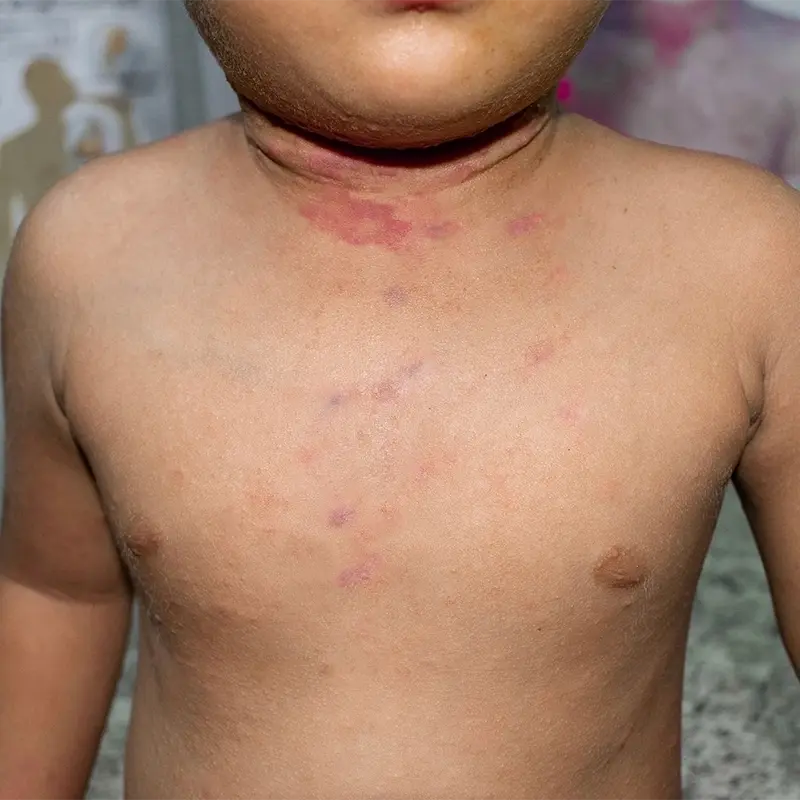
Erythema infectiosum is often called the ‘slapped cheek’ disease because it makes the cheeks look bright red, as if they’ve been slapped. It’s a common illness in kids and is sometimes referred to as the fifth disease. Just think of it as a typical childhood rash caused by a virus.
Who gets Slapped Cheek syndrome?
Erythema infectiosum, or the ‘slapped cheek’ disease, mostly shows up in young kids. Sometimes, when one child gets it, others in the family or their classmates might get it too. However, about 1 in 3 people who catch the virus might not show any signs at all. If adults never had it as kids and get exposed to the virus, they could also get it.
What is pityriasis versicolor?
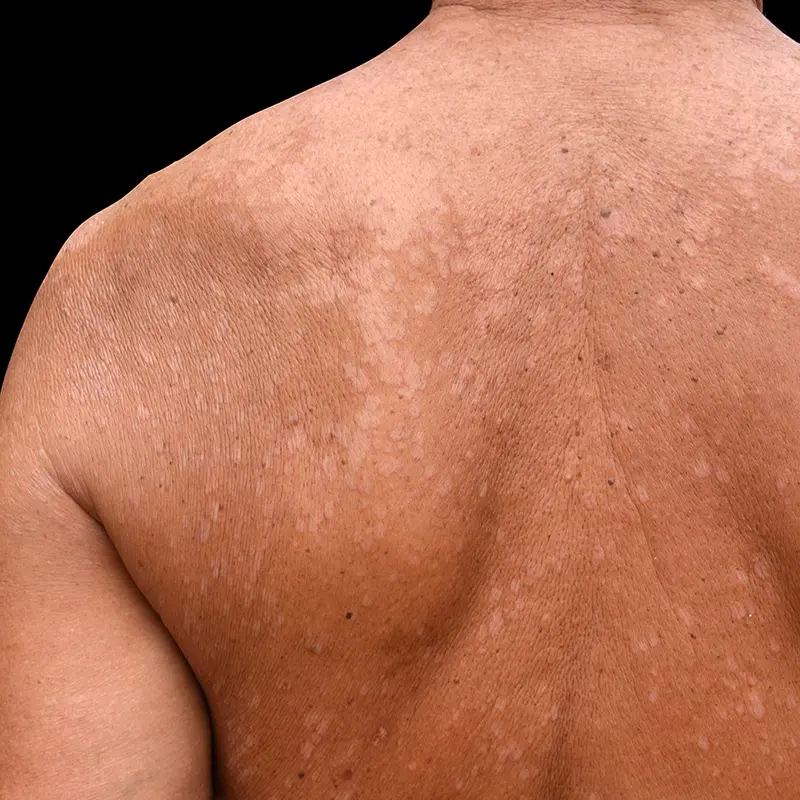
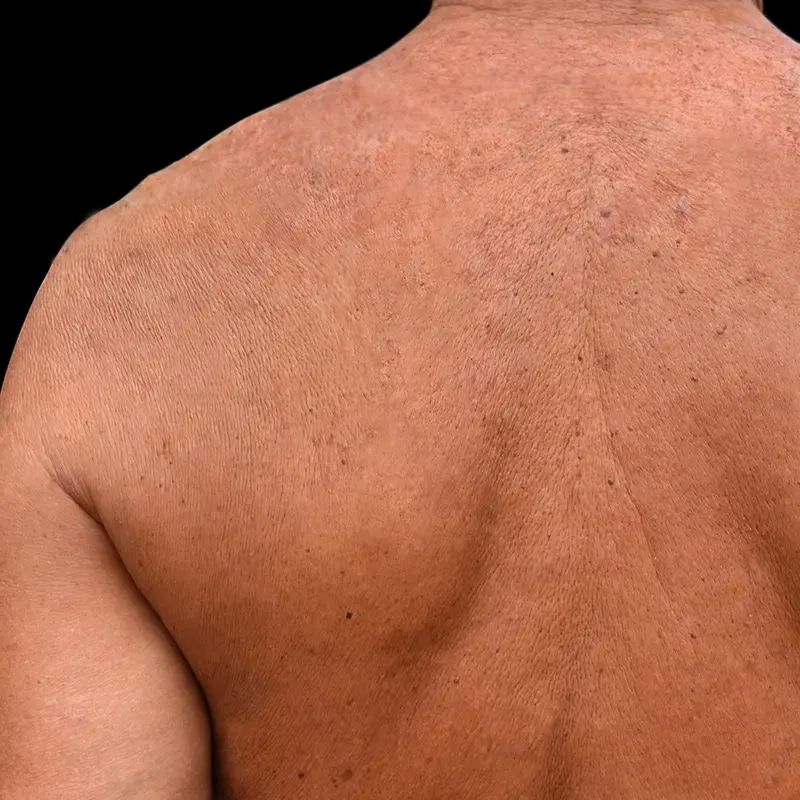
Pityriasis versicolor is a common yeast infection of the skin, in which flaky discoloured patches appear on the chest and back.
Who gets pityriasis versicolor?
Pityriasis versicolor is a skin condition often seen in young adults, especially men. It’s more common in hot, humid places and among those who sweat a lot. It might come back in the summer and fade in the winter. It’s not traditionally infectious, but can appear in multiple family members.
Before
After
Drag to compare
Before
After
Drag to compare
What is seborrhoeic dermatitis?
Seborrhoeic dermatitis is a common skin issue affecting oily areas like the scalp, face and chest. It comes in baby and adult forms. If linked with psoriasis, it’s called sebopsoriasis. A mild form on the scalp is known as dandruff, which shows as flaky skin without redness and might itch.
Who gets seborrhoeic dermatitis?
Seborrhoeic dermatitis affects 3-12% of people. It appears in babies under 3 months, usually clearing by a year. It also starts in teens and is more common in young adults, older individuals, and males. While it mostly occurs in healthy people, certain factors can intensify it in adults.
What is keratosis pilaris?
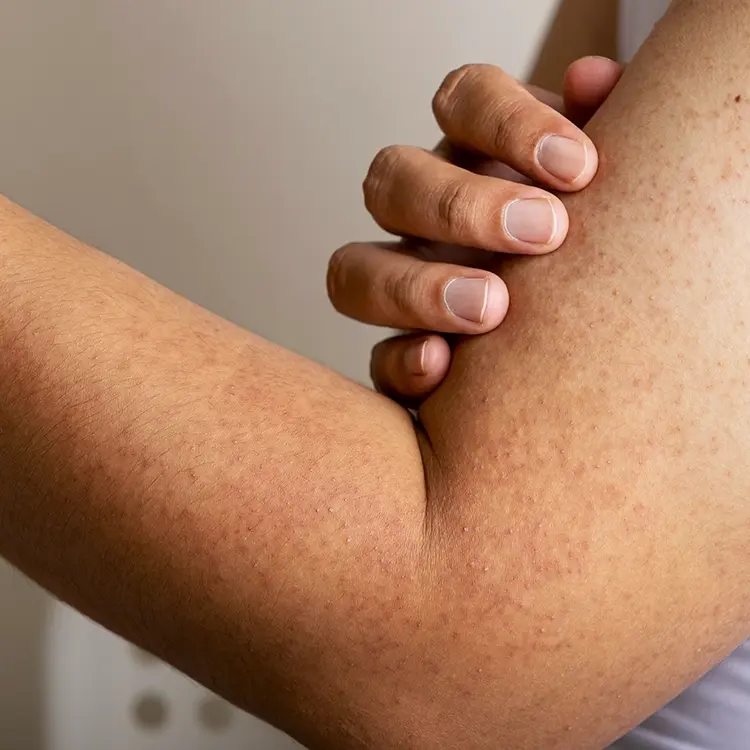
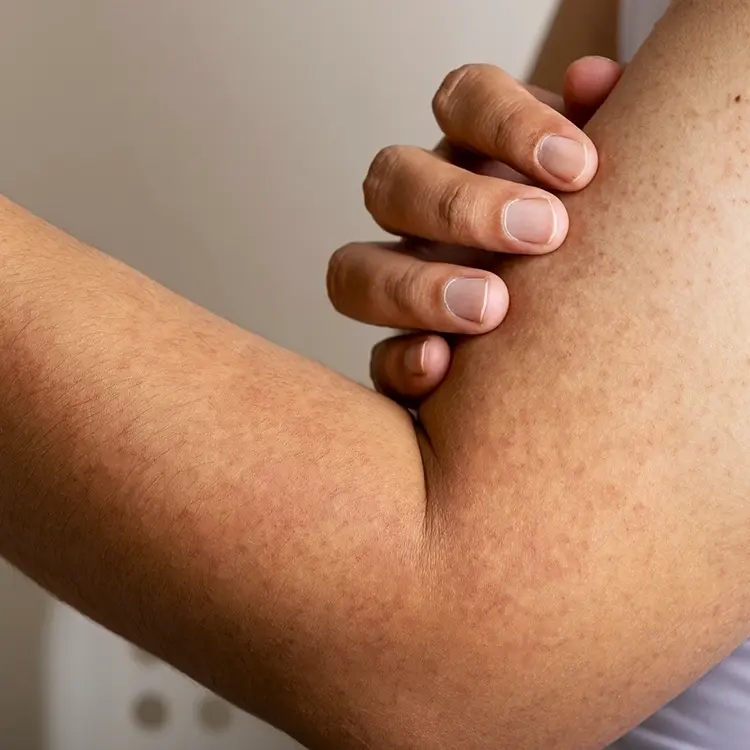
Keratosis pilaris is a common skin condition where rough patches form due to protein build-up in hair follicles. Essentially, it means ‘scaly skin with hair’. It starts in childhood and becomes noticeable in teens and adults. It’s harmless and not contagious.
Who gets keratosis pilaris?
Keratosis pilaris is typically seen in children and young adults. It affects 50-70% of teenagers and 40% of adults. It has been associated with other skin diseases such as atopic eczema.
Before
After
Drag to compare
Before
After
Drag to compare
What is impetigo?
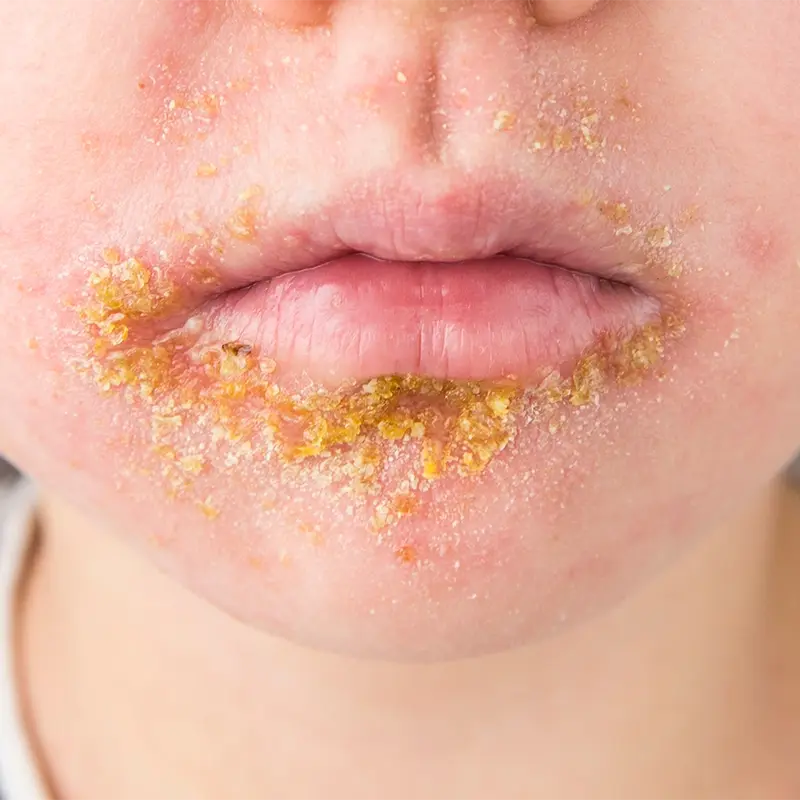
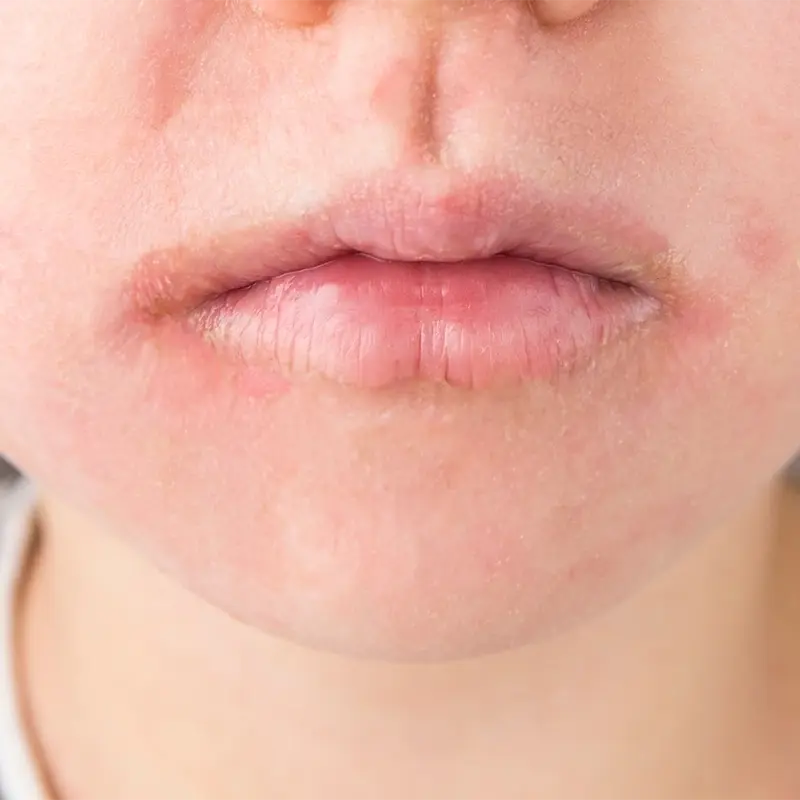
Impetigo is a highly contagious skin infection causing pus-filled spots and golden crusts. It’s a surface skin issue mainly caused by two bacteria types. It has two forms: ‘school sores’ and a blistered version. Ecthyma is a deeper, more severe type of impetigo. Secondary infection of wounds or other skin lesions with the same pathogens is called ‘impetiginisation’.
Who gets impetigo?
Impetigo often appears in young kids but can affect anyone. It spreads through touch. Having skin conditions, injuries, a weak immune system, living in warm, humid places, not keeping clean, or being in crowded places can increase the risk.
What is milium?
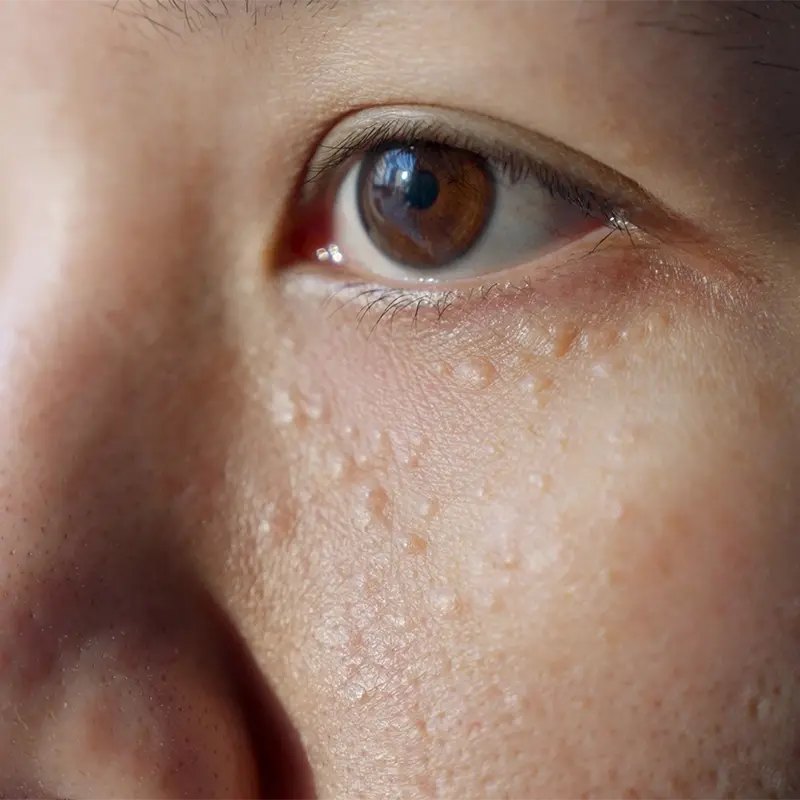
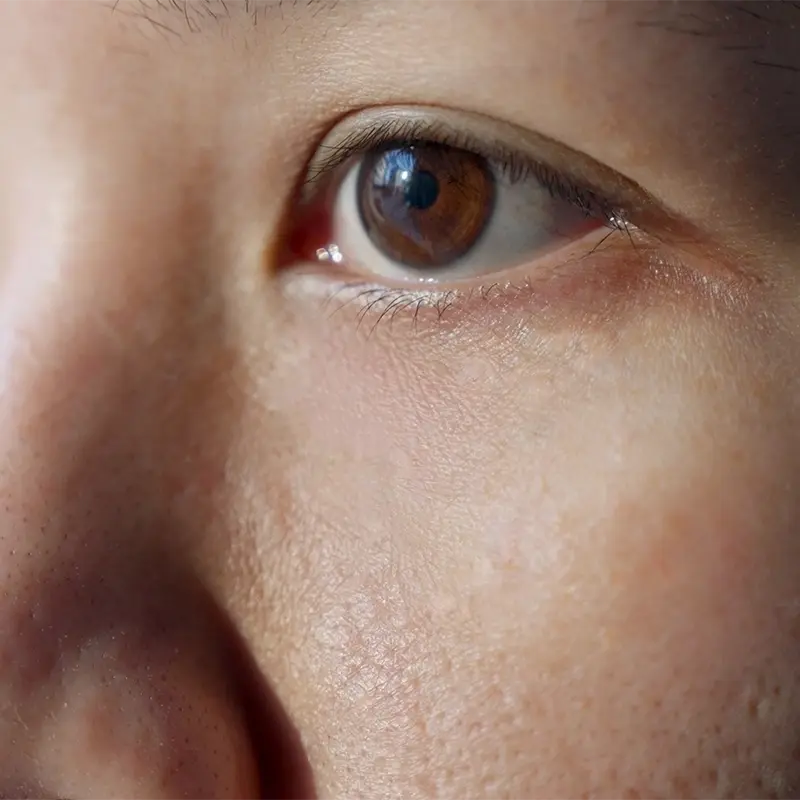
Millium is a tiny, harmless bum filled with skin protein, appearing white and sitting just below the skin’s surface. When there are several, we call them milia.
Who gets milium?
Milia are common in all ages and both sexes. They most often arise on the face and are particularly prominent on th eyelids and cheeks, but they may occur elsewhere.
Before
After
Drag to compare
Before
After
Drag to compare
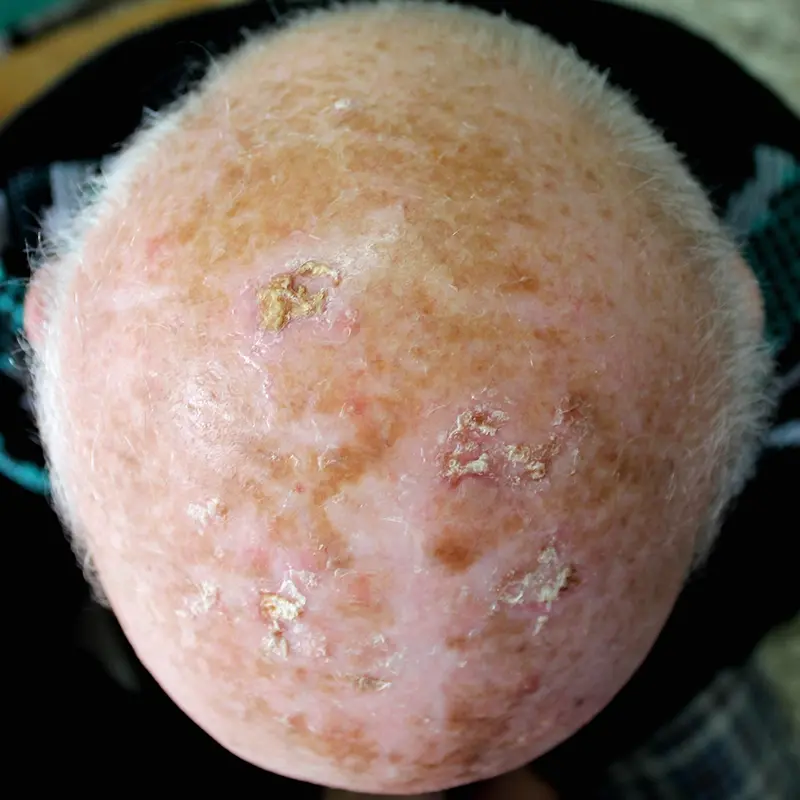
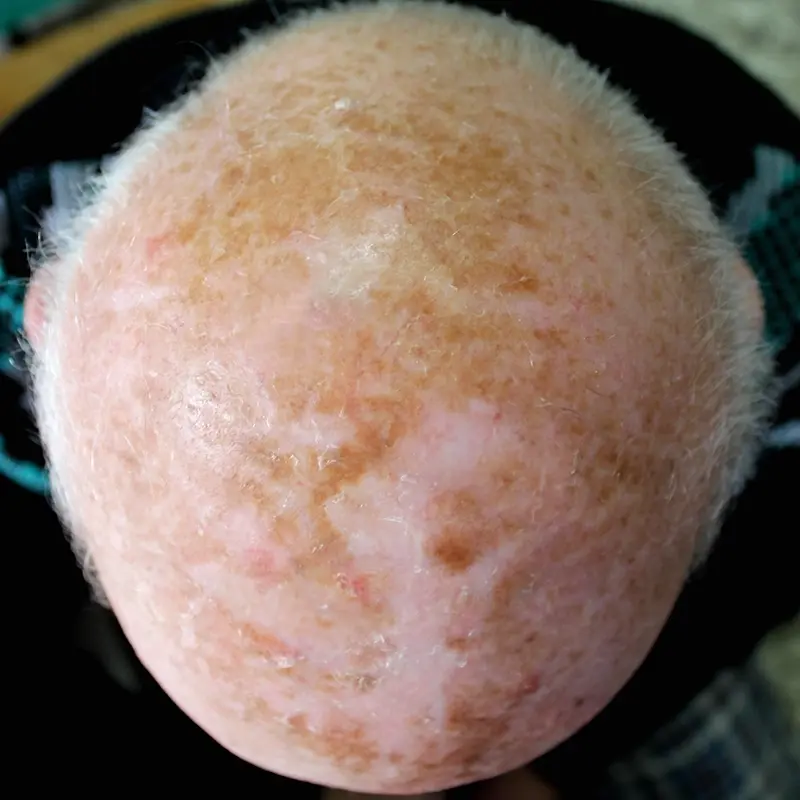
What is actinic keratosis?
Actinic keratosis is a rough spot from sun damage that’s an early stage of a skin cancer type. It’s important to monitor since it can evolve.
Who gets actinic keratosis?
Actinic keratosis are rough spots common in people with a lot of sun exposure, especially in tropical areas. They’re more frequent in those with fair skin, past sunburns, outdoor jobs or activities, or a weakended immune system.
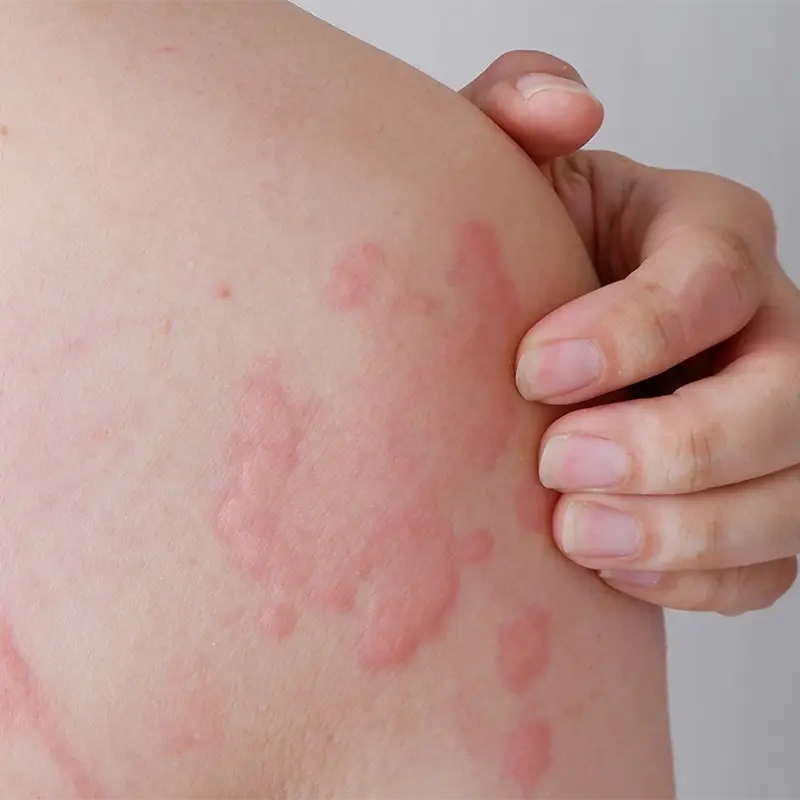
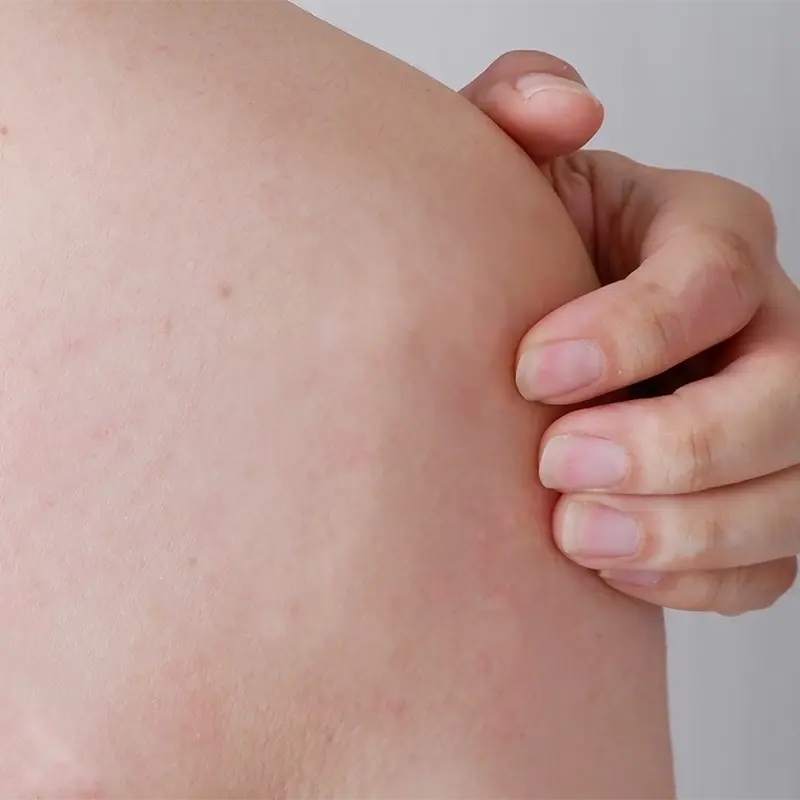
What is urticaria?
Urticaria, often called hives, causes itchy or sometimes burning raised patches on the skin. There are different types. Some people also get angioedema, deeper swellings, which might be painless or itchy and take up to 3 days to fade.
Who gets urticaria?
One in five children or adults has an episode of acute urticaria during their lifetime. It is more common in atopic individuals. It affects all races and both sexes.
Before
After
Drag to compare
Before
After
Drag to compare
What is molluscum contagiosum?
Molluscum contagiosum is a common skin infection in kids that results in small, round bumps with a little dip or dot in the centre. It’s caused by a virus.
Who gets molluscum contagiosum?
Molluscum contagiosum is most common in young kids under 10 years old. It’s more often seen in warm places and croweded areas. Teenagers and adults don’t get it as frequently.
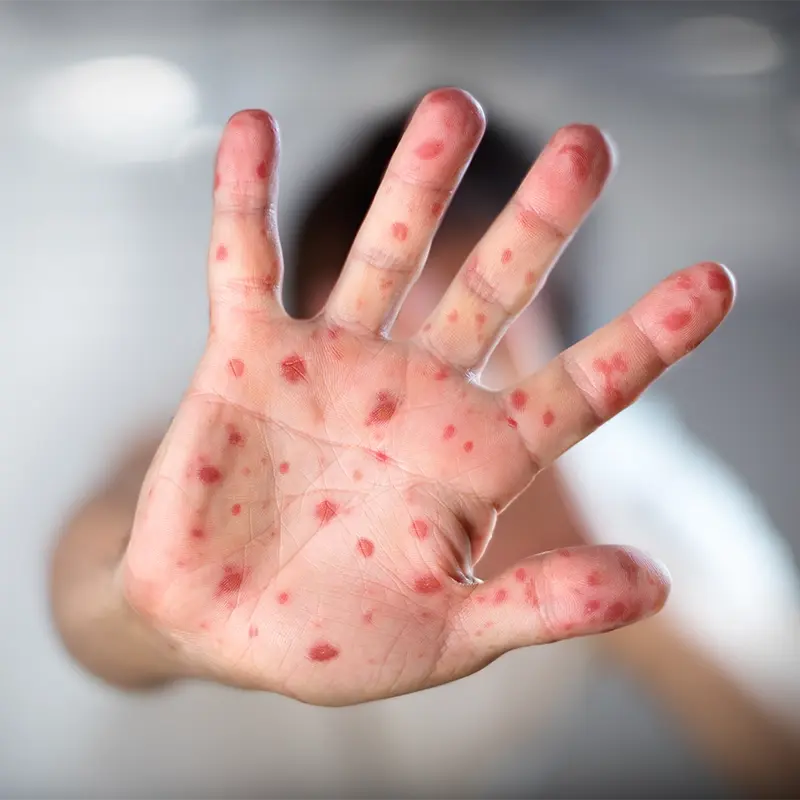
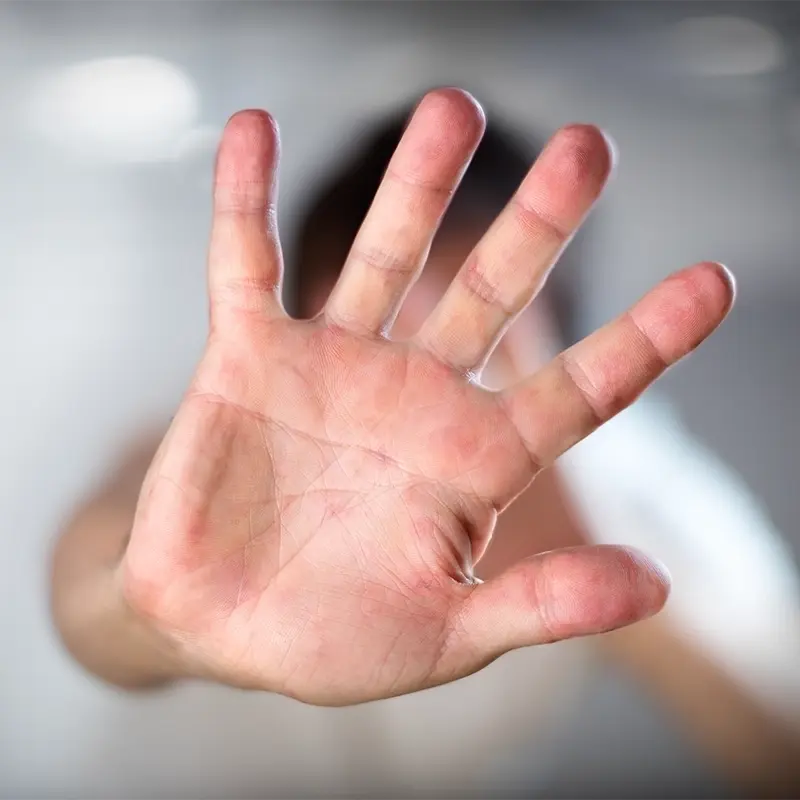
What is hand, foot and mouth disease?
Hand, foot and mouth disease (HFMD) is a common virus that gives kids, especially under 5, little blisters on their hands, feet and around their mouth. It’s most common in warm weather, like late summer or early fall. And don’t worry, it’s not related to the foot and mouth disease we hear about in animals.
Who gets hand, foot and mouth disease?
HFMD is most common in young children, especially under years old. While it can also affect older kids, and even adults, it’s quite rare for healthy adults to get it. Just to give you an idea, in some places, for every 100,000 people, between 90 to 2,400 might get this disease in a year.
Before
After
Drag to compare
Not sure?
Don’t worry if you don’t see a condition you are concerned about. Our doctors can help you diagnose your skin condition and start your treatment plan.